

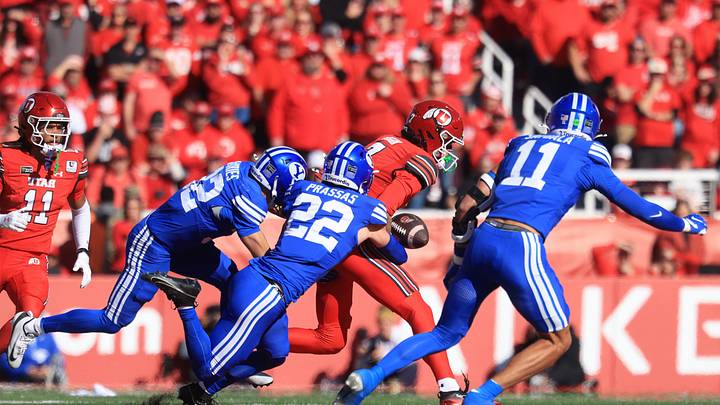
BYU’s defense didn’t play their best, but they played well enough to win in Salt Lake City. The Cougars had the 20th-best run defense in the nation, allowing only 100 yards per game. They held Utah to 124 rushing yards. They had the 48th-best pass defense, allowing 198.8 yards per game and 206 to Utah. Their total defense was 19th in the nation, allowing 298.8 per game. They held the Utes to 328 yards of total offense. The Cougars were above their average in turnovers, forcing two, when they had had eight all year and had been averaging one per game.
The most important stat for a defense, the points allowed per game, was where it was too much above their season average. BYU came into the game allowing 18.8 points per game, with the 25th-best scoring defense in the nation. They gave up nearly 10 more points than their average, with 28, and it cost them dearly. Still, they’re improving.
BYU is now allowing 102.7 rushing yards per game making them ranked #20 in the country. They’re giving up 199.6 per game in the passing game and that ranks 50th in the nation. They’re still a top 30 defense, though! The Cougars total defense is allowing 302.3 yards per game, making them the #21 total defense in college football. BYU’s scoring defense is allowing 19.8 points per game and is 28th in the FBS.
What the Defense Needs to Improve On
The BYU defense did more right than wrong in this game. They improved in an area critical for them that cost them in their first loss, and that was finishing sacks and tackles for a loss. They weren’t perfect at it, Devon Dampier still got away from them too many times. But they did better. More on that in a moment. Another problem they faced (that they shared with the offense) was too many free yards via penalties. The Cougars gave Utah 80 free yards on 11 penalties. That’s always big, but never more so than in a rivalry game on the road. That has to be cleaned up for BYU’s hopes moving forward.
What the Defense Did Right



As I said before, BYU finished at the point of attack much better than they had been in previous games. Despite the loss and the good play from Utah’s quarterback, they did that in this game. They sacked Devon Dampier three times and recorded 11 tackles for a loss. Could they have done a better job of boxing in Dampier? Absolutely. Is 3 sacks and 11 tackles for a loss still good? Yes.
BYU kept Utah from ever pulling away. The Utes averaged 485.4 yards per game, 9th in the nation, and BYU held them to 328 yards. That’s 157 below their season average. The same was true for the BYU scoring defense. Utah entered the game with the 12th-best scoring offense, with an average of 38.9 points per game was held to 10 fewer, 28 points. Could the defense have done better? Did they do enough for BYU to have won this game? The answer to both questions is yes.
Defensive Players of the Game
Bodie Schoonover and Keanu Tanuvasa played well on the defensive line for BYU. Schoonover had six tackles, two sacks, and three tackles for a loss. Tanuvasa had five tackles, including three tackles for a loss. No one is rooting more for Texas Tech to lose a Big 12 game, and BYU to get another shot at Utah in the Big 12 title game, than these two seniors.
Defensive Stat of the Game
Something that gets lost in the great, Heisman-worthy game Devon Dampier had for Utah is that the BYU defense shut down the Utah rushing attack. Utah came into the game with the eighth-best rushing attack in college football, averaging 226.9 yards per game on the ground. BYU held them to 124 yards. They were especially successful against a great running back in Wayshawn Parker. Parker had been averaging 90.8 rushing yards per game, 33 receiving yards, and had scored 13 touchdowns. He had 36 rushing yards, 5 receiving yards, and 0 touchdowns against BYU.
 Add us as a preferred source on Google