

Let's get right into it.
Portland St, rushing yards allowed
This game was filled with jaw-dropping stats on both sides of the ball, but the most impressive one was that after Portland St had a combined 47 yards on their first two drives, they had a grand total of 4 yards on their last 12 drives. When they even made it past the line of scrimmage, they were having one of their better drive (by the way, I got all of these stats from statbroadcast.com).
Stanford, short drives
For Stanford, it was the opposite. Their first two drives were both decent, but they couldn't get anything going before that. On their first nine possessions, they had no drives that lasted longer than 6 plays or that went further than 20 yards.
East Carolina, endzone wall
Unlike the Vikings and the Cardinal, the Pirates had some success moving the ball. However, in their 5 red zone possessions, they only made it into the endzone once. BYU didn't give up their first touchdown of the season until the 4th quarter of their third game.
Colorado, sustained drives
With the exception of the final drive, where the Cougars took a knee, BYU never had a possession that lasted less than 2 and a half minutes. Meanwhile, the Buffaloes had five such drives, and only one of them ended with a score.
West Virginia, passing explosion
This may not have been BYU's most mistake-free game of the season, but it might have been their offense's most explosive game aside from the Portland St game. Bear Bachmeier was 18-25 for 351 yards, giving him a whopping 14 yards per pass. That's about twice as much as you would generally expect.
Arizona, ground and pound
In this game, it was more about the run. Bear Bachmeier and LJ Martin combined for 251 yards rushing and three touchdowns. And it's not like they had one big run that inflated that number. Their biggest run was 28 yards. This means they were consistently getting decent chunks.
Utah, fourth down stops
I wanted to find some stats related to the average volume of the crowd, but I couldn't find anything, so I guess we'll have to go with something related to the actual game. Utah was 1-5 on 4th down, and they were almost 0-5 because the one they got was by only a few inches. This is how BYU was able to win despite being outgained by over a hundred yards.
Iowa St, turnover margin
There's only one stat I could've picked for the one, and that was the turnover margin. BYU was +4. This was a huge reversal after the Cougars were -3 in the turnover margin against the Cyclones in their most recent meeting in 2023.
Texas Tech (regular season), QB playpen
BYU didn't have a whole lot of impressive stats in this one, but they did hold Behren Morton to 5 carries for -47 yards. BYU gained the same number of yards on Morton's 5 carries as they did on the 21 combined carries between LJ Martin and Bear Bachmeier.
TCU, flowing offense
After all the times BYU has gotten crushed by the Horned Frogs recently, it was amazing to return the favor. On BYU's first seven drives, they got four touchdowns and three field goals. TCU didn't get a single stop until the fourth quarter.
Cincinnati, red zone dominance
The Bearcats had the ball inside BYU's 30-yard line seven times, and they only had two touchdowns and zero field goals. The other five times, they had a turnover on downs, a fumble, and three missed field goals. Meanwhile, BYU scored every time they got inside the Cincinnati 45.
UCF, pinpoint accuracy
In the regular season finale, Bachmeier was 21-25 for 289 yards. That's an 84% completeion rate. BYU literally had more touchdowns than incompletions.
Texas Tech (Big 12 Championship), strike first
Just like in Lubbock, BYU didn't have very many impressive stats in this game, but their first drive was impressive. They had 14 plays for 90 yards in 6:55, and it was only the second time all season that they scored a touchdown on their opening drive. Unfortunately, they didn't score again for the rest of the game.
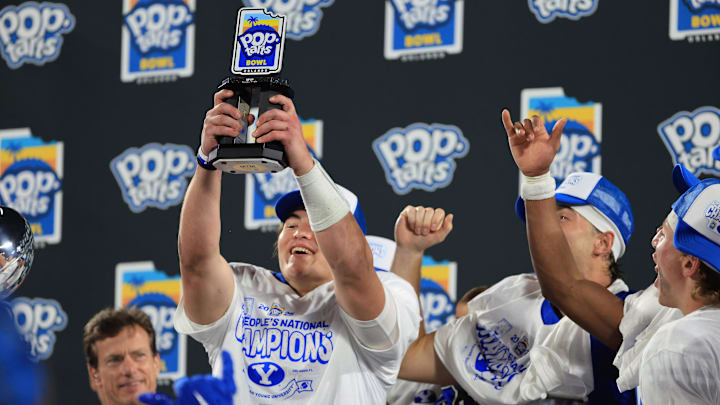
Georgia Tech (Pop Tarts Bowl), redzone defense
Coming in, one of BYU's biggest strengths was their redzone defense. In the first half, Georgia Tech appeared to have figured this out because they scored touchdowns on all three of their redzone possessions. However, in the second half, they had three more redzone possessions, and they didn't score a single point. Instead, they had a fumble, a missed field goal, and an interception. This allowed BYU to complete their fifth double-digit comeback victory of the season.
 Add us as a preferred source on Google