

The college football season has worn me down. I'm exhausted from the arguments. I'm wiped out from the constant griping, moaning, and screaming. Everybody has an opinion, but the College Football Playoff selection committee is the only voice that matters in the end, and their final decision was transparently inconsistent and unjust.
The signs were present all season: 0-2 Notre Dame remained in the top 25 rankings. Alabama was quickly forgiven for losing to a horrible Florida State team. Miami lost two unranked games and missed the ACC conference championship game, replaced by 5-loss Duke. But BYU, a team whose only losses of the season were both to top-four Texas Tech, that is a team that cannot be allowed to compete for the crown.
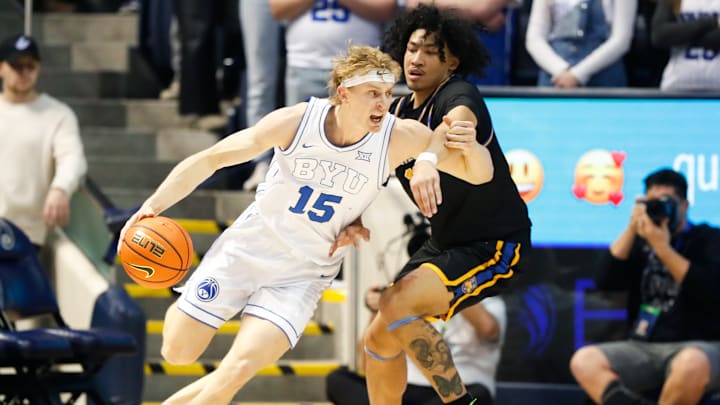
As the calendar turns from football to basketball, I'm reminded that BYU basketball is a sincere contender for the national championship this season. A team with expert-backed optimism, high-end talent across the depth chart, and the right to compete for the Final Four and beyond in March. With all the frustrations over the College Football Playoffs, my spirits are lightened when I think about the opportunity provided by college basketball and the 64-team frenzy that is March Madness.
March Madness is a land of opportunity. The College Football Playoff is a cigar club where only the wealthiest and most reputable names are welcomed.
BYU shouldn't pull out of the football business -- they're not going to pull a Notre Dame by taking their ball and going home -- but it may be time to adjust expectations at the kickoff of every new season. Frankly, the chances of winning a championship in football are severe in comparison to basketball: the wild and wide-open frontier.
BYU didn't reach the College Football Playoff for one reason this year: those in power didn't want to grant them entry. I could -- and have -- write thousands of words on why BYU's exclusion from the final 12-team bracket was unjust. How Kalani Sitake's team did everything the selection committee had asked while avoiding any resume-shattering slip-ups. How teams like Alabama and Miami were afforded bad losses and given a free pass to the final, while BYU was excluded for losing to what may be the best team in the nation. How for weeks, ESPN deliberately left the stretch Y off of resume comparison graphics, contradicted themselves in defense of the SEC and Big Ten while taking the offensive against the Big 12. How BYU was dropped in the rankings for losing in their conference championship game, while Alabama didn't budge.
Joel Klatt put himself and the irrationalities of the college football-minded mob on display when he said the following: "We're not looking for a Cinderella. Nobody cares about a James Madison or the equivalent of George Mason [going to] the Final Four."
"In fact, hot take:" Klatt doubled down. "The NCAA basketball tournament is a joke. It's the dumbest tournament and least-fair tournament in all of sports."
Klatt continued to state how unfair and ridiculous a single-elimination, neutral site format was (pay no mind to the CFP's format) and that fans don't like to see upsets, they want to see the "better team" win every game.
You can see the full clip here:
🔥HOT TAKE from @joelklatt🔥
— The Next Round (@NextRoundLive) December 15, 2025
"We don't want Cinderellas. We want the best teams playing each other at the end... The NCAA basketball tournament is a joke. It's the dumbest tournament and the least fair tournament in all of sports." pic.twitter.com/8eMwoC8b4N
This is the biggest issue facing college football in the modern age: everyone believes they're an expert. The SEC is the strongest league because they have the best recruiting grades, the most historical relevance, and the biggest brands. This extends beyond the SEC, of course, but that league as a whole has been the biggest perpetrator of this mentality in 2025. This belief is so deeply-rooted that losses to 5-7 Florida State and unranked teams like Louisville and SMU can be brushed aside. Notre Dame was ranked ahead of Miami, a team they lost to, for nearly the entire second half of the season, despite holding identical records. College football is built by a belief that the better team is the team that experts believe is better, regardless of the on-field result.
This is why individuals like Joel Klatt scoff at the idea of G5 serfs Tulane and James Madison breaching the sacred threshold of the College Football Playoff: even with a first-round upset, these teams would be jeered by fans of the SEC, Big Ten, and powers of the sport. Football fans are appalled at the concept of the "lesser team" winning the head-to-head matchup that terms like "fraudulent" are pasted on their foreheads the moment they lose.
Take TCU the year they reached the four-team playoff and won their semifinal game against Michigan. Many only remember that team for their blowout defeat against Georgia, not for the many wins they gathered along the trail.
The culture of college basketball is fueled by competition. Upsets and Cinderellas are celebrated and revered, not tarred, feathered, and discarded. Talk to any college hoops fan and ask them about Fairleigh-Dickinson beating Zach Edey and Purdue. UMBC taking down the top overall seed Virginia. Loyola-Chicago and Sister Jean (may she rest in peace) defying the odds and climbing to the Final Four. Florida Gulf Coast making Georgetown look like the Washington Generals as the Eagles threw down lob after lob. Kemba Walker carrying the UConn Huskies from the bottom of the Big East Tournament all the way to the National Championship.
The thought of these triumphs alone should spark a smile. Flash a grin. In college basketball, overcoming the odds is cause for celebration. A multi-million dollar roster falling to a bunch of zero-star recruits and walk-ons? Efforts like these are cause for celebration and a sign that sports are healthy and thriving.
In football? Ask an Alabama fan about G5 Cincinnati reaching the CFP. Ask a Georgia fan about TCU. Ask a Notre Dame fan about James Madison and Tulane this season. What's the prevailing sentiment? These teams don't deserve a spot. They don't deserve to compete. They're only in the bracket so that the NCAA doesn't get sued.
Football has it all wrong. Underdogs are a good thing. No-name colleges going toe-to-toe with the giants of the land is healthy for the sport. In college football, the SEC, Big Ten and (maybe) the Big 12 and ACC have hopes of scrapping for the national championship trophy, but not every program begins the season with hopes to accomplish the impossible; not every team has something to play for from week one.
In basketball, teams that win games cannot be denied. Every team has a chance to compete, because why on Earth would we allow the fate of these basketball teams to be determined by a bunch of wealthy old men watching from afar?
Does BYU have a chance of ever reaching the College Football Playoff? Yes, so long as they win the Big 12 Conference Championship game. That's a needle's eye the team will be forced to thread just for the chance to compete, while Ole Miss, Miami, Oregon, Texas A&M, and the like are allowed to sit around at home and wait for their invitation to arrive in the mail.
BYU basketball will be afforded much more opportunity. In the challenging Big 12 Conference, BYU will build its resume against Arizona, Houston, Iowa State, Texas Tech, Kansas, and a host of startling opposition. But reach the NCAA Tournament in March, and all that matters is winning the games in front of you.
The CFP is restrictive, but March Madness is inviting. College football hates an underdog story, but college basketball thrives on those who achieve. BYU football may never get a chance to compete if they fail to go undefeated, but BYU basketball will be given a shot every single year.
Complain all we want, point out the systemic flaws, and point to BYU's merit during the football season, but the CFP committee will never listen -- they have their own agendas to pursue. On the hardwood, however, everything is equal once the ball is tipped. May you never change, college basketball.
 Add us as a preferred source on Google